

Get started
Administrate Automator: Deep Dive


Demo: See how Administrate Automator brings powerful automations to training, no IT resources or coding needed.
Join Administrate’s live event on growing in-person training programs with better operations, scheduling, capacity planning, and revenue strategy.
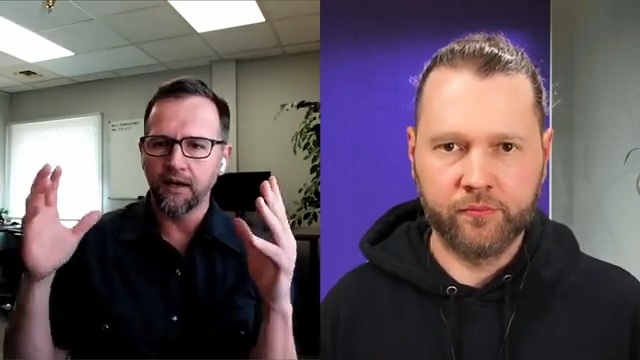
In this LinkedIn Live, John Peebles, CEO, and COO Patrick Flanagan discuss why classroom training is still where high-value learning happens, but why an LMS makes it so painful to scale.
We dig into why an LMS cannot manage live training, and in fact, turns it into a logistical nightmare. But a training management system, like Administrate, can solve this nightmare and reduce your manual work by 90%.
49:32 watch · 8,277-word transcript
Auto-generated transcript — may contain errors. Tap a timestamp to jump the video.
Alright, everybody. Welcome to another live stream from administrate intergalactic headquarters. My name is John Peebles. I'm the CEO here at administrate, and you can see that at our incredible studio, I am alone today. But that's don't worry. That's, by design. Instead, we're gonna be joined by Patrick Flanagan, our chief operating officer. And unlike me, he's not headquartered here in Edinburgh. He is based out in Montana, and so he'll be dialing in via Zoom. And, happy to have him. So, Patrick, why don't you say hi and make sure that, we can hear you and everything. You may have noticed that we have intro music today that was promised last live stream. So just one of the many technical innovations that we continue to bring you on these, LinkedIn live events.
So, Patrick, why don't you say hello? Hey, John. Happy to be here. Can you hear me? Yep. It's all good. This is, beaming out to Bozeman, Montana where Patrick and some of our team are located all the way back to Edinburgh and out to you wherever you may be in LinkedIn. And, you know, if you're listening along, tell us where you may be dialing in from the world today. We'd always be interested. We're gonna kinda monitor chat and go through, and interact with you folks as we explore the topic that we have prepared for today, which is how to grow in person training, volumes, the amount of training that we're doing while, reducing the manual effort that is involved. So this is a topic that, you know, while maybe some of us who are tuning into March Madness and looking for the latest thriller and blockbuster and so forth might not find very compelling, but administrate this is kind of something that we live and breathe, which is this question of how do you scale training?
How do we go from whatever the training volumes we're doing today, particularly classroom training, which is very, very difficult to scale. How do we do that and get it to the point where we can, serve, you know, ten times the students, ten times the instructors, and and get hopefully many more times, the outcomes that we want for our organization. So, Patrick and I are kind of coming to this today in a kind of casual environment. We have another technical innovation that we would love to share with you, which is an amazing digital whiteboard. So we might actually sketch out some stuff here and, see how that goes. But I thought it would be good to just start off and talk a little bit about elearning, which many of us are very familiar with.
We've all logged in and taken a course and gone through, and and it's an effective way of training versus classroom training. And, that's, you know, whether it's in a Zoom classroom, like we're kind of in today, or a classroom that, you know, has tables and chairs. We're all physically in the same spot, or maybe it's even a lab based setting, which would involve, you know, various different pieces of equipment and so forth. What is the difference between elearning fundamentally and this classroom training? So I don't know, Patrick. Do you wanna dive in and take a take a stab at what some of the differences are between the modalities and when you would use one versus the other and so forth. Sure. Yeah. I think, you know, thinking about elearning, you probably came on the scene twenty, thirty years ago and got really popular, kinda late nineties, early two thousands.
And it was a great way to to get a lot of content, like, standardized content out in a way that was, helpful for the learner in the sense that, maybe they could learn on their own time. And, when, you know, I can remember seeing that innovation at work coming in, doing our, you know, security fundamentals or or things like that, HR training. It was super helpful for for that and took a burden off the training team, certainly in in that respect. Yeah. And we like to think that elearning is super valuable if you wanna get a lot of people trained quickly in a very standardized way like you're saying. It can also, be much lower cost because you can produce this content once or you can even buy in the content, and then students can engage with it.
And sometimes that content can be relevant for, you know, years, without needing a lot of modification. However, classroom training still is massively popular today, particularly in corporate America, particularly post pandemic. And there's a whole bunch of reasons for this. I've got this little kind of folder, that I have on on Apple Notes where I kind of keep a list of various studies that show the efficacy of classroom training versus elearning. And, you know, we're not trying to bag on elearning necessarily, but, you know, there is certainly a gap between, how students learn and how effectively they can demonstrate the skills that they are supposed to have been acquired if you take that training within a class with amongst your peers, with a great teacher versus kind of going through an elearning module.
And, actually, we we're not anti elearning at all at administrate. All of our customers use it. We use it extensively. But I think, another kind of facet to those studies is that e learning can be very effective if the content is super high quality and if it is layered in with classroom training, throughout the the kind of process that the student goes through. And so, you know, there's this there's this tension between, do we wanna, you know, e learning is very scalable. You can put that content out there. You can have a lot of students log in and and, take a course very quickly and effectively. But it is not necessarily always the best modality for students to acquire skills, demonstrate those skills, and do so very effectively.
So, I think, you know, in terms of what we're talking about today, a lot of times, what we have seen is customers of ours, they tend to put a heavy emphasis on on the job training, learn learning how to do your job, learning how to do the most important aspects of your job in terms of, you know, you know, I can paint this boat or I can, you know, do this activity on the assembly line or, you know, med tech. We've got a lot of customers in there. I can operate this radiology machine and so forth. That type of training tends to be favored in classroom at least for the initial stuff. And then you have refresher training or kind of update style training that is often layered in via elearning.
So, what what we wanna talk about today is the great thing about classroom training is it works really well, and it can be super effective. And, you know, my mom was a teacher. I think your mom was as well, Patrick. And we've all had that conversation, with you know, we've all heard that about our our moms, which is like, your mom was a great teacher. She's my favorite and so forth. And we all probably tuning in have, this notion of there was this teacher throughout our academic career that really influenced us and was just a phenomenal teacher and instructor. And so getting that kind of experience to folks that are trying to do an important job is is really, really critical, and and we'd love to see that. But how do you scale it, and where do the problems begin to occur?
And what we tend to see is, unfortunately, there's a lot of folks out in corporate training that are using the wrong tool for the wrong job. So I'll pause there, Patrick. I don't know if, you wanna add anything to that. But maybe, you know, what what are some of the pitfalls that we tend to see out there with, delivering training at scale, particularly classroom training? Yeah. I think, you know, just to add in a point here, when we say classroom, there's also the virtual classroom that we've, you know, all experienced probably, in a big way coming off of COVID. And there's some great, you know, obviously, like Zoom and and Teams and those type of tools have come a long way. I remember doing some virtual remote classroom with a hundred pounds of cables and stuff back in the day, and it was super clunky and and weird, at a university.
But, I I think those tools allow for a lot of advances and flexibility, and that that's kind of one of the downsides or pitfalls you would you'd maybe think about with classroom is, oh, we've always gotta get people in the classroom, the physical classroom. We've gotta, you know, train for it. And and certainly, you do at some point. But just being able to say, you know, even with our own training internally, you know, hey. We're having a session at nine AM. We've got twelve, employees on, and we're gonna do breakout rooms. And, you know, there there's we've been able to take these tools and really support the classroom experience virtually. So just wanted to add that that component as well.
So I think now is the time where we should, try out our brand new digital whiteboard experience because Okay. I really wanna crystallize this idea of most companies today, almost all of them, particularly ones that are of scale, will have a learning management system. And we are not anti LMS. We're big fans of the LMS. We are partners with all our great learning management systems, and all of our customers have an LMS. But there's a challenge that kind of crops in when you think about classroom training. I'm gonna try to draw it out in very bad, drawing. In fact, I'm gonna make sure that, you can still see me. Isn't this amazing? This is incredible technology. But, basically, if you think about we have a traditional LMS over here.
Right? It can be, anything super fancy or it could be something that's off the shelf. And we're going to come through, and we're gonna say we've got this content. Right? And this content could be SCORM. It could be videos. It could be, PDFs. Whatever it is, however you're gonna think about, how what you wanna put in front of your students. And you go through and you fill out a bunch of things when you're designing this content, and it's stuff like the title of the course and who the audience is and how it should be taken and so forth. And there might be steps and various things that you have to complete and quizzes and whatnot. But, basically, you do this whole process here, once. Right? So this whole bit of defining the content and the structure of your course.
And then what you do is you get your students. Right? And, hopefully, hopefully, there's a bunch of them. These are stick figures, by the way. Very high fidelity here. And, you know, they kind of go on to this course, and they do a bunch of learning. They consume your content, and they come and they do a bunch of learning. They consume your content, and they come out, and we get an outcome. Right? And this outcome could be a quiz. It could be a certificate. It could be whatever. And this works really, really well. And, unfortunately, when you start thinking about classroom training, you kind of fall into what we have colloquially, like, defined as the LMS trap. Right? And that is, LMSs were designed for, the creation of content or the the hosting of content and then this kind of methodical repeated students joining in and so forth.
And what they were not designed to do was to, run the same course over and over and over again. So if you think about this, we'll have sales training one zero one or whatnot. It, it will not. You you wanna run that same class every week. And so what that looks like is you come through and you say, look, I've got my content, and your content again is gonna be papers and PDFs and, you know, various things. But then you've got classroom sessions. Right? And these are this is a little clock. It's a little clock. Little clock. These are at specific dates and times. Right? And for each of these sessions, you need things like, equipment.
Right? That could be anything from, you know, some sort of, you know, device or radiology machine, whatever that you need. It you need a room. Now this could be a physical room. This could be a Zoom room. Could be Teams, whatnot. And you need to not erase. You need an instructor. And then you need to go through and also think about the date and time right over there. Date time. And you need to think about this for every session that you're going to teach in this class. And then once it's defined and all set up, right, we've typed all this stuff in. Now it's time to get your students going to it. Right?
And and these look kinda similar. Right? It's about the same amount of work. I mean, there's a few things that you've had to think about, like equipment and rooms and dates and times or whatever that you don't think about with LMS. But now you're ready to go. And, unfortunately, the class ends and you get your outcome. And then, that's very sloppy. Then behind my head, what happens is if you wanna run that course again, you gotta do this entire process all over again. So you gotta start at step one, go through the entire thing, and do it all over again. And, unfortunately, within a traditional LMS, that means you're forced to type in all this stuff again. You have to check all these calendars again. You have to get all this equipment again and so forth, and it becomes a very, very laborious process.
And so that's where we think in terms of there's a better way to do this and there's a better tool to do this, And that's where the training management system, which is what administrate is, comes into play. We let the LMS focus on what they're great at, which is e learning, and then we focus at what we're great at, which is scheduling classroom training. So I'm gonna take a sip of my all time favorite drink, which you cannot get here in Scotland. They're sponsoring this broadcast today. Not really. Cheerwine. I don't know if anybody's ever had this in the comments, but let us know. Patrick, what did I miss?
I think I think you kinda nailed that, John. In terms of elearning, I think you really there's been a lot of focus in the last ten years put on the learner and the learner experience. And so you've also heard the term learn, you know, LXP or or learning experience platform. I think that, it's it's interesting because, you know, the technology was so new on the scene twenty five years ago, and then you kinda have everyone adopting it. And then where are the innovations? The innovations are coming in on content and tagging content and having content surface up to you. Also, just the experience on the learner side. But I think one of the things that you kinda mentioned there that, you know, was, was was kind of good for the learner, but but more difficult was for the administrator, the person actually having to build out the training, schedule the training, send the communications on the training.
And so, I think, you know, it's it's high time for for technology to kind of focus around that aspect, of the training experience. And I think, you know, some sometimes what's not often thought about right away is if the technology is great for the learner, that's that's fifty percent or sixty percent of the experience maybe. But when everything in the background is running fluidly, the operations of the training, the communication, that actually enriches the learner experience, even more. And so, I can tell when I go to a training event or any type of event, frankly, a concert, whatever.
If I'm getting, like, what I need to know, when I need to know it, where I go, how I show up, everything's smooth. I don't have to go log in to a weird system to find my tickets to to show and scan, that sort of thing. Like, when you can really tell when somebody's thought through the experience on the back end operationally, and that actually compounds into a better experience for the learner and also for the person, scheduling and and, you know, doing the operations operational aspect of it. Yeah. And one of my favorite stats of all time is that there was a survey done by the folks over at training industry, and they they wrote a great book called what makes a great training organization. And one of the things that came out from them studying, you know, hundreds of different training events and thousands of different students was that the number one factor that influenced a student's perception of the quality of training was not the grade they got or the outcome that they achieved, and it wasn't the instructor, and it wasn't the classrooms or the food.
It was the administrative experience that they had in booking and attending and getting all that stuff, that that they need that they needed. So, you know, if you really want to improve your training and the perception of your training, get that administration and that experience, really, really high quality, not only for the learner, but also your back office team because it'll show. I think just quickly on that point too. There's a whole job satisfaction element, and maybe this is going down a rabbit trail that we can talk about later on. But when that job satisfaction is high on the administrative aspect of training, that comes through to the learner. That comes through to the entire experience.
And so when you can kinda take that frustration or friction out of the process so people can really show up and do what they wanna do and get excited about the actual training and the actually actual learning happening. That that just feeds through through that throughout the whole experience. Yeah. I mean, a simple example of that is the other day. I I had an Amazon delivery come in just a few minutes, and there was a confusion over, you know, did I need to show my ID? Because we'd I think we'd ordered alcohol or something. And and I had a meeting that was starting, like, in a minute or two, and you you just you kind of arrive and you're flustered. And, I mean, that's just three percent of what our poor customers sometimes have to go through because that kinda gets on to the next point, which is, okay, a training management system can plan out and help you plan out this stuff, and we'll we'll kinda walk through how we do that.
But even with the best laid plans, you're going to run into problems, and we gotta handle these exceptions. So why don't we talk quickly about exactly how a training management system helps folks navigate this minefield of trying to get all these people and things in the right places, the right time. And the keyword here, if you remember nothing else from this kind of session, is the word template. Right? So that is the killer feature and the main differentiator between a training management system and a learning management system. And the reason is if we go back excuse me. If we go back to that drawing that we talked about, we're wanting to repeat this cycle of running the same course over and over again.
We wanna do it as in a standardized a way as possible, but we know that all the pieces are going to be, interchanged. And so the instructor might be different, and the location might be different. And, you know, the the time of year and the dates and all that, all of those variables and all those pieces will be different, but we wanna run the same structure every time. And the way that we do that is with a course template. And so being able to bake into the system, these are the things that you need in order to run a class is one of the core differentiators between training management systems and learning management systems.
Yeah. Absolutely. And, Sean, you you reminded earlier of how our moms are both teachers. My wife is a teacher as well. And year after year, it gets easier. And so you refine as you go. But once you know how to plan each part of that session and you just have that kind of on as clockwork, it's easier. And so when we see that in training, it's the it's getting all of that stuff. Maybe that lives in folks' heads or it lives on a spreadsheet somewhere that you're accessing or on a whiteboard or a calendar. You know, you're going to all of these different places to find this information. That can be difficult. Also, just thinking how, I was on the on a call with somebody in in Med Device training, last week, and they say, every time I have to book the training center, I call up someone six months in advance, and then we call so and so, and then we call so and so.
And we all decide when are we gonna do ours, you know, who has what going on. So that that sort of stuff is is, you know, complex and and takes a lot of time. And so if you can if you could think about how do you get that into a template to where it works, and and you can just repeat that over and over again, you know, that's that's what we're going for. So, yeah, love love talking about this stuff. Yeah. So back to our amazing digital whiteboard, this toy, which we may remember from when we were kids or maybe we have kids, is probably one of the better metaphors that we've come up with. And that is, you remember this, you'd have a piece of wood and it would have shapes cut out of it, and you had shapes in a box.
Right? And it teaches very young children as to you put the triangle through the triangle hole and nothing else will fit and so forth. This is what we mean when we talk about course templates, except instead of a triangle or a circle or a square or whatnot, we are talking about specific instructors. So one of the big challenges that you have at scale with training is you might have five or six hundred instructors. Maybe fifty or sixty of them are full time employed by the training team. Most of them will not be. They will be subject matter experts that teach, you know, a couple dozen courses a year for you, and you're not their boss. You're not in control of their schedule. You know? And actually just understanding who is qualified in order to teach this course that that I'm trying to run is a difficult problem because you might know everybody at the training center, you know, in Dallas, Texas where you're where you're located, but you may not have that institutional knowledge of Amsterdam and, you know, who's able to teach the course there.
So a training management system not only tells you what's required in general terms, I e, we need a couple of instructors here, but it'll help you hone in on the specific instructors or the specific types of resources that you'll need in order to run that training.
So I think when you think about scaling training, right, this time that it takes to figure out, here's the course that we wanna run, here's all the things that we need to do and all the pieces that we need to assemble. That's part of it. But then there's kind of the operational aspects. And one of the things that we talk a lot about when we're going through a sales process with a with a prospect is this idea of tasks and task workflows and also this idea of automated communications. So, which one do you wanna take, Patrick? And I'll cover the other.
Why don't you take task workflows, and then I'll jump into the communication. Okay. So task workflows is, maybe not very inventive name that we've come up with, which is we've all used a CRM. We all have seen tasks that get assigned to people or groups of people and so forth. But what you can do within a training management system is you can do two things. You can define various tasks that need to happen. So some examples of this might be, you know, clean the room, double check that all the equipment is there, you know, make sure that the guest passes are printed. Right? Double check with security that it reads on the list. You know, all of these types of things that you need to get set up in advance. And you combine the things that you have to do with the times that you have to do them.
But instead of thinking in terms of times, you think in terms of offsets. And what I mean by that is you define, look, this task must be done x days before the event or one day after the event, right, if I'm trying to clean up after the the training that's happened. And the reason that you think in terms of offsets and not specific dates and times is because that is all part of the template or pattern that goes into getting ready to run this course. It's a super powerful thing, very simple concept, but super powerful, hard to, get in any application really, other than a training management system, and LMS won't have any idea of this because, you know, it's elearning. You just log in and do it. And, you know, what what happens then is when you go to schedule and you say, I wanna run this course next Tuesday or in a month from now, the computer will automatically calculate the days and the times and the people that need to be doing these things.
Then it will remind you. It'll bubble up on a dashboard. And so when you come in on a Monday or Tuesday and you're looking at what are the things that absolutely must be done today or tomorrow or whatnot, it's all laid out on a list. It's all prioritized. And if you need to go on a holiday, or vacation, as we say in the US, or you are sick or whatnot, your teammates can come in and say, what was all the stuff that John was doing or needed to do? And they can reassign that, and they can divvy those tasks up. And this means that not only does nothing get forgotten about, but it also means, again, we're standardized on that process, and we don't have to think about it. So super powerful feature that, folks love.
Yeah. And similarly, the the communications are are a key piece of that. So I think this is, you know we'll talk about the workflow aspect first, and then we'll talk about the experience, aspect of communications, second. So, workflow, same thing. So, putting together just a rich template or or,
yeah, five, six templates, whatever you need. I think we sometimes see that the optimal amount of communications is five or seven per event, something like that. But we don't wanna go in and type those every time. So if we have the templates ready to go and they're merging in rich data fields, whether it's the location with a map or the, link you need to access, your badge or something like that, the the the date, time, all that sort of stuff. That that's coming in. Once you set it up once, it's just ready to go. And now the the real key feature in addition to that is it's all rule based. So one day before the event, send this one out.
One day after the event, send this one out. Upon registration, send this one out. You know, send a survey afterwards. Send a, you know, recertification email, two years after the event saying, hey. You need to be recertified. So once you get that set up, it's all rule based, based on the event, and then you never have to think about it again. So, that we just save tons of time on communications. People, love that feature. On the experience side, on the other end of it, I'm kind of reminded about, an app that I don't particularly enjoy, which is, called TeamSnap, but that is for my son's, soccer, events.
And I get notifications nonstop. Now the problem is I need to see some of those notifications. I don't need to see about eighty percent of those, although they could be helpful if I pop in there. So what I end up doing is ignoring most of them, and then I don't have the valuable information I need. Or if I'm driving to some city three hours away to see my kids event, I don't know what email to pop in and find, okay, where's the actual soccer field at what time, and when does my kid need to be there, and what uniform do they need to be wearing, blue, white, black, whatever. And so, what we really do is is focus on best practice of what needs to be in that communication, what's too much to send, what's not enough, And make sure that that folks get the right communication when they need to see it with the right information in there.
Yeah. These are automated, highly personalized communications that have as much information as you'd like to put into them, and they can be delivered via email or also SMS, which is often way more popular in other parts of the world because that's just how people tend to work. Yeah. I would I would add one thing too. It's really nice to embed, like, the virtual classroom link into those communications too. So that automatically goes out. I have my Zoom link. I can access the class if I'm doing virtual or, you know, can be a lab experience as well if I'm doing, you know, some sort of technical training. That's that's also quite helpful to having that in there. And if we think about it, the alternative to this is I have to figure out what courses are running tomorrow or the next day.
I have to remind myself or remember that a communication needs to go out. I then have to log in and grab the roster of students, and maybe this is in in a spreadsheet, maybe it's loaded up in our LMS. Who knows? I have to download that. I have to somehow get it into a mail merge app, whether that's running in Gmail or Outlook or whatnot. I have to find the template. I have to double check the template. I have to do the merge. I then have to hit send. And maybe I'm in a team inbox or maybe I'm in my inbox, but then I have to kinda hang out and watch for all the out of office notifications to come in and responses and so forth. And some of those might be bounces and things that are actually really critical because the email address is wrong or whatnot. One of the great things about a training management system is it should have the ability to show you the deliverability of your communications and alert you to the fact that, hey.
This this email, these ten students did not get this communication. There's probably a problem brewing here somewhere. Yeah. Absolutely. And just being able to set up that whole rule based system or be able to say, you know what? Floor one got flooded today. We're up on floor three. Hit that class roster, send out that templated communication or or an ad hoc email, is is really key and and just automates a lot of that work that you'd normally have to sit out and type out all the email addresses and that sort of stuff. So, yeah, the communication aspect is is really key. Yeah. And there's there's kind of two product improvement points here that I think are really important to understand.
And the first is just that you're probably going to do a better job on sending out these emails. Right? Because you're not sending them out anymore. Computer is doing that, so less mistakes will be made. That really helps that perception of training quality that we were talking about. And the second thing is, what we tend to see is customers really struggle to send out, you know, one or two reminders in advance and maybe one or two follow ups after the the class has ended. After they get administrate in a training management system, now it's they can send out five, six, seven communications in advance and a few after and reminders to research and so forth. And, again, that just really improves the product, and, it's it's really satisfying to see.
Absolutely. So that's tasks and communications. We've talked a little about resources. We were on last week, and I asked JJ what were some of his favorite resources that he's ever seen customers, manage. I think one of mine from last week was fire engines. So, you know, we had a customer that was doing training on various different fire engines, and you gotta know how many hoses and ladders and all that stuff. But then I I was thinking about it a little bit more, and we've got another customer that, has these specialized, pools where they hoist a helicopter up above the pool to safety training for oil and gas rigs and and so forth. And, everybody gets in the helicopter. They set the helicopter on fire, and then they drop it in the pool.
And you have to and I think they turn it they rotate it when it when it goes into the pool as well. So you have to get up get out of an upside down burning helicopter underwater. So that's one of the the cooler resources that I've seen customers track. I don't know if you've got any that come to mind, Patrick. So I love that one, the hydro gar with the helicopter.
Simulation of a ship bridge. It's always cool to walk in there and see that operating. And these are high value resources. These are not cheap. So Oh, yeah. Yeah. You you gotta keep them booked and and, utilized in the right way. Yeah. And, I mean, there's been, CPR dummies, you know, where they've got all these instruments. You're doing the chest compression too. I I don't know. I haven't gone through the training. But, you know, the these things need to be there. And if you got a student that doesn't have their dummy to practice on, that's a problem. Yeah. And, that that really can impact the effectiveness and the perception of the quality of your training. Yeah. Yep. So there's there's kind of this idea where we we now go through, and this process of scheduling a single class with a template means that we can go from potentially a few hours.
I mean, I think we've on the the large end, we've seen some customers. This is a ten hour plus process to get one class scheduled. Some customers can get it down to an hour or two before they come on board with administrate. And then the nice thing is once they're on board, we usually get that down to thirty seconds, you know, a minute because you don't have to think through everything anymore. You choose a location, and you you immediately just walk you through this process. And, you know, it's basically, like, when you go to the bowling lane and the the gutters are are covered up, and you just throw throw strikes all day. And so that's great. Right? Because now we've cut out huge amounts of time, and that is very, very effective on the single class scheduling use case, and that has been our bread and butter for years.
But I'd like to spend at least a few minutes talking about the next kind of level of scheduling and decision support around how you can build out these schedules of classes because that's great that we can schedule one class, but we still have to do that maybe tens of hundreds of times in a month. And that process can be very, very time consuming, and it's all the same challenges of who, what, when, where, and for how long, but you then multiply it out in, you know, the number of times that you're running these classes. And that kind of mass scheduling problem is a very acute one that most large corporate, you know, training divisions in the US will experience.
Sometimes they will think in terms of we wanna put out a schedule for the year. Sometimes they'll think of it in terms of six months. Sometimes it's three months. Sometimes it's monthly. Whatever it is, it's gonna be, you know, very, very difficult. It's gonna require locking people in rooms with very, very complicated spreadsheets that can often have errors in them and so forth. And how does a TMS solve that problem?
Yeah. I I mean, I can give some high level here. So first of all, you gotta have the data accessible, and you gotta have the right data. So I think, you know, when you're thinking about this, it's it's the resources, like, labeled correctly. You gotta have the instructors with the proper certifications. So, you gotta have the the rooms, labeled properly. And so I think once you get all the variables, labeled properly and the data is clean, it's then you could start into those calculations. And I think one of the things we see sometimes is folks will say, okay. It's time to schedule the next quarter. Let's all, you know, down tools, go into, the, you know, the big conference room with the whiteboards and the magnets or the the spreadsheets, and let's just figure out how we can do this.
And so everyone everyone pull up their calendars. Okay? When's everyone have vacation? You know, can everyone work all day or only in the mornings? Like, what's your availabilities? And we get all that done. What events are we running, and and why are we running those events? Are these based on needs? Are these just the events we ran last quarter, and we should just do that again? Or is there a new product coming out with new content, new certifications, that sort of thing? So you get all these variables. It's very complex. And when you're running a thousand courses times twenty variables, fifty variables, that becomes, you know, a little more than, eighth grade math.
And so I think, you know Which is where I top out. I'm I can't go above that. Yeah. Exactly. I was doing some of this last night with my kids. So what what you do is you say, okay. Let's all put our brains together. It's time intensive. It's it's, like, maybe not that fun. Maybe it is fun. But at the end of the day, you get something that works, barely works, or is close to working. And you're like, well, we'll just hammer out the rest of it from here, but we got a starting point. So let's go. And what what's actually can occur here is rather than just having, you know, your ten humans of your training team in a room with I've already lost the math.
Fifty thousand variables for for a thousand courses, something like that. Why not have a computer or a calculator go ahead and say, I'll take that brainpower off of your plate, and I'll do it. And, actually, I won't just come up with one solution. I'll come up with many solutions, and, we'll we'll bring in kinda optimization. So wanna make sure all your instructors are utilized or your resources utilized, let's do that. If you want to add in some some instructors, take away some instructors, you know, that comes up. And then what you have too is not just humans saying, oh, that's not gonna work. Let's let's scrap that idea and go somewhere else.
You have the computer say surfacing these complex. So, hey, You don't have, you know, you need one more certified instructor. Or if you had another resource, you'd be able to come up with whatever it is, an easier solution or fifty more, you know, events that would be easier to run over the the course of the quarter. So, just thinking about there's a lot of talk of AI, out there, And we're we're not even kind of on the AI yet, but we're we're actually just thinking about how do you leverage the the computer to make these decisions for you, surface up these conflicts, and b, just kind of that augmented tool so that you can focus on what you do well and let the computer do the math.
I mean, if I had this for for my kids' eighth grade math homework, you know, we'd be done in half the time. Yeah. Absolutely. So I think, you know, that idea of doing the mass scheduling and helping customers solve that scheduling challenge is something that I'm sure we'll dig into in future sessions and and so forth. But we just wanted to kind of roll out a few examples around, you know, automating communications, templates, scheduling on a quarter or a year long view as to how we achieve effectively this right here, right, which is back to the amazing whiteboard, this reduction in time of ninety, ninety five, sometimes eighty five percent in terms of the burden of work that goes on to a training team's shoulders.
And this is this is amazing. Right? Within our promise with the training management system and administrators, that within ninety days, we can cut down ninety percent of the manual work involved through all these various templating tech tactics and so forth. Last session that we did a week ago, we talked about various issues that get surfaced on the dashboard when things go wrong because inevitably, you know, an instructor oversleeps or gets sick or, you know, resource needs to go for maintenance or whatnot. You know, we can resolve those. But we reduce this time and, you know, this is kind of the with administrate investment of time, and we're left with this huge amount of time that we can then, well, what do we do with it? What we see customers do overwhelmingly is they take this time and they plow it back into the thing that they do best and the reason that they exist and the reason that, you know, these these training departments are are there for and the thing that they're really passionate about, which is more training.
And, you know, it's staggering to see. We've got data now spanning years and years from companies that are multinational, really focused on customer training to internal training departments, all kind of different types of training that when a training team can automate away the drudgery low value work that they really struggle with and that can, you know, cause their lives and so forth to be pretty difficult. They then plowed into more training, and the average is forty percent growth in terms of the volume of training that customers can deliver usually after about six months to a year. And that starts to compound each year because the more training that you do, the better outcomes you'll get.
Maybe you find more areas that you wanna invest in. You find other bottlenecks that you wanna take care of, and that growth will continue usually for a number of years. And it's really exciting to see because last year, we were doing a thousand classes. This year, we're doing, you know, thirteen hundred, fourteen hundred, and no additional bodies need to be hired, which is the biggest problem with classroom training. And that is, you know, more training, more problems with classroom training. That's the old way of thinking, and that's when you don't have that software to help you really, break the break that cycle. And, and so I think, really, we've been going now for just under an hour, probably gonna wrap it up soon, but our our real goal and our real desire is to kind of spur folks into thinking there could be another way to deliver this very valuable classroom training, which has often outsized impact, way better outcomes in many cases than elearning.
But the reason we haven't been doing more of it is because it's expensive, it's time consuming, and more training means more bodies and more problems. And so with the training management system, and we've been able to do this for hundreds of customers over the last decade. Some of the most complicated, largest training operations you've ever thought of, you know, hundreds and hundreds of people that are delivering tens of thousands of hours of training a year. And, you know, there's no secret sauce here. It's just all down to automation and making sure that we have the right, software. So I don't know, Patrick. Any closing thoughts? And I I haven't been able to monitor the the chat to see if anybody is, popping in with questions or comments. But, you know, maybe if you've got anybody saying anything out there, we can we can address some of those questions.
John, yeah. I'm not I'm not looking at the chat either. But I I will say that you're we're we're always hearing in this industry. We're being told to do more with less, or the work is never done. And I feel so behind, and I'm trying to deliver for our customers and our our employees, you know, as we get products off the line and and that sort of thing. And so, I think, yeah, the work is never gonna be done, but we can shift the scale ratio. You know, we're able to do something. Right? And and maybe we're feeling behind. But if we can move that along and say, hey. Let's cut out a lot of operational work that is low value so that you can kinda get ahead or be a little more proactive or deliver a little bit better for your customers.
And that end goal, that patient outcome, or that customer satisfaction, that's that's what we really wanna help with and and kinda why we do what we do. Yeah. I mean, fundamentally, I think we're like a lot of folks in the industry. We love to learn, and, it's one of the best parts of my job when I can learn something. And, so, you know, how how we scale that and, use that to transform our our companies and our operations and our organizations is always, of of heavy interest. So I guess just to sum up, if you've had any questions or comments or whatever, don't, you know, don't hesitate to get in touch with Patrick or myself. Connect with us on LinkedIn. This is kind of the second test of this lifestyle of event that we've been doing, and we're gonna do a lot more of them.
And we're gonna be you know, now that the testing is kind of through and nothing has caught on fire too badly, we'll be inviting some customers and various folks from around the industry to come on and and just share their success and the the amazing things that they've achieved. And talk to us about the the helicopter crash training and all the various interesting things that, they're they're up to around the world. And so we hope you'll join us in the future and, connect with us in the meantime, and stay tuned for, kind of future updates. But I don't know, Patrick, if you got any other closing words, but I think it's probably a good a good point to call it quits. Yeah. No. Sounds good. Thanks, John. Thanks everyone for joining. Alright, folks. Well, we will be in touch, and, we'll see you next week.


Get started
