

Get started
Administrate Automator: Deep Dive

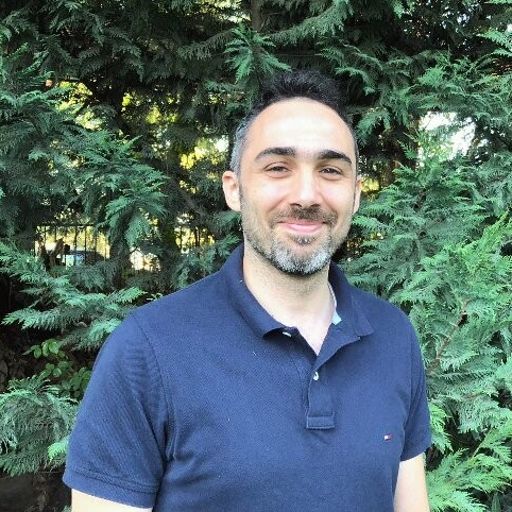
Demo: See how Administrate Automator brings powerful automations to training, no IT resources or coding needed.
In this LinkedIn Live, we discuss how to build a high performing customer training operation.
John Peebles, CEO, joins Kevin Streater to discuss what it takes to build an effective, high-performing customer training operation. Streater built ForgeRock's (now Ping Identity) customer training operation from nothing to IPO and now chairs Administrate's Customer Advisory Board.
Learn how to leverage customer data as your most valuable asset, automate business processes with the data, and engineer flexibility into your learning technology to future-proof your organization.
59:34 watch · 9,711-word transcript
Auto-generated transcript — may contain errors. Tap a timestamp to jump the video.
Today, I'm really excited to invite onto the show Kevin Streater. Kevin is an innovator, a guy who's always out there learning new things and taking what he's learned and incorporating it into how he runs his training business and his training operation. And there's been a a whole laundry list of features that Kevin has helped us build out in Administrate. Things from like Learning Paths to our API to integrations with great vendors like Cloudshare, you name it. And Kevin has been instrumental in shaping our strategy and teaching me a lot about how this industry works and how this industry should work. This is gonna be a fantastic discussion. You're not gonna wanna miss it. And in addition to being a great customer and a visionary, Kevin is a true gentleman, and we were delighted to recently welcome him on board as the chair of our Administrate Customer Advisory Board.
Kevin's gonna do a great job on that already. He's holding us to task just like he did when he was a customer. And, he's gonna be fantastic over the next couple of years driving the insights and the accountability that customers want from us, and and taking that through and marshalling that towards a great outcome. So I I know you're gonna enjoy this conversation. I really enjoy talking with Kevin whenever I get the chance. And, as always, if you have got any questions or comments, let us know.
I know things are getting easier, but I've always been at the leading edge of technology where it's always a bit difficult. And you you need some hands on experience. You need some just to learn the product. And, that got me into technical training, I guess, about thirty years ago now. I've learned a lot about it from Sun Microsystems. It was, at the point, one of the largest training providers in the world. It was also very forward thinking in terms of technology. We often used to say that something that Sun was creating as a product, the rest of the market would actually understand fifteen to twenty years' time. So we were very early into playing with things like SaaS and hosted platforms. And and one of the things was around the training world and sort of training management as as its own distinct thing, with its own tools and its own capabilities.
So I sort of spent some time at Sun, probably about twelve, fifteen years doing that that role. And, then went to the Open University for a while and spent four years there. And the Open University in the UK is the largest distance learning university. They deal with about two hundred thousand students concurrently. Operating at that scale means you have to really think about how you do everything from content creation, to how you deliver, to just how you interact with everybody. But doing it at a massive scale is just something that comes through in the DNA with the Open University. So took a huge amount of lessons from that, and then got the opportunity to go to a really small start up.
The one of the cofounders was, former colleague of mine and, got the opportunity to sort of start from the ground up. It was a really good point to just sort of reflect on, okay, so what what were the things that were important in those past roles? How could I take those into this new role with a new organization that wants to play in the enterprise space? You don't typically have companies that are sub a hundred people acting like they know how to work with Fortune five hundred companies. But that's what we want to do, and that's where we started from. So, I guess all my past experience sort of fed straight into that and, led to really successful sort of eleven, twelve years, with Fortrop.
So, and, obviously, that's where I came across Administrate on that journey and, got to know you, John, and and the rest of the team. That's right. You're you know, you're not supposed to have favorites with children or favorites with customers. But maybe since you're no longer a customer, we can admit to you're always one of our favorite teams to work with and partners. And and I think the the reason for that was there's a bunch of reasons, actually. But, going back to maybe the founding of ForgeRock, it was always a bit of a outlier company in terms of where it was founded, the relationship between the co founders and how they all knew each other, and then also the software where it came from. And, and then the fact that it was a very disciplined vision.
Like you said, let's start with enterprise. Let's target only that and and go for it. So, you know, maybe, just talk a little bit about how, unusual, I guess, for draw in a good way, was in just from even the beginning. Yeah. It it it all came out of Oracle's acquisition of of Sun. Sun was getting very, very much into open source. It had always been a big contributor to the open source community in a lot of projects and had a long term vision to to pretty much open source its entire software archive. Everything would be open source. In there was a lot of infrastructure software. So directory servers, email servers, and web servers in those days.
A lot of infrastructure stuff was all being open sourced. And at the time, a lot of enterprises were very interested in this type of model, particularly in financial services where they wanted transparency about what was in the code. And, that got Sun into a really interesting position where, really, the media companies with mission critical assets that had a lifetime that you can measure in minutes, whilst they still had value. Or, large customer facing organizations. The they they needed this type of transparency with the software. They also needed customization and flexibility, and and that was everything that Sun could offer. And, when Oracle, took over, all the projects, got closed out, And, a lot of customers didn't really understand.
So, that's that was where ForgeRock came in, was really the support organization to help these customers keep going. So from day one, it was very focused on high end financial services, media, global organizations, high end support requirements, deep technical skills needs. You don't normally get that on day one with five employees, but that's where we started from. So it's no surprise that we sort of were able to take it from that and, fortunately managed to take it all the way through to an IPO, in just on eleven years. We started with that mindset, and, Steve, who's one of the cofounders, always started with a we we start company in five countries on day one.
Who else does that? Unless you've got a clear vision about where you wanna head, you don't do that sort of setup. But that's what we wanted to do. So I guess we we all hit the ground running with experience for all my respective areas in product, in technical support, in training. And just how can we build a global organization from the beginning? Let's not just do a piece here and a piece there. Let let's think global in everything we do. And I guess that's that's really become one of my longer term themes is don't try and think of just sort of your your little piece of the world as it is today. Think about where would you like this to be? Where would you want it to be in five, ten years' time?
We actually got the opportunity to do that. Not many companies do. But it really showed the benefit of making decisions early, and really think about what's critical early. And something I've learned from from Sun particularly was customer data is the most valuable thing you have. And in the training world, that's very much, okay, who are our students? Who do they work for? What classes have they been on? And did they do the follow on class? And did they meet the prerequisites, and are they doing class number three on the learning path yet? That that's all critical data because that's how you get your students to learn and and progress and use your software.
But running a business on a spreadsheet can't let you do that. So you have to start bringing in some tools to help with that. Going to market and looking for enterprise grade tools quickly became one of the things that we we we developed that as a skill really early is you need a support tool. So go to the market and find the best leading support tool in the world and go and deploy it quickly even though you're probably the smallest client they've got. Yeah. Right. Across the whole of the organization. Yeah. Yeah. And so, you have this open source software company that has almost
I A lot of metaphors there. But, you you had, you know, customers that that needed support. So, and they needed the software to continue to work even though it was open source. And so, you know, is is very much ForgeRock was originally a very much a classic traditional open source software company, wasn't it? Where you could download the products and start running them yourself today, and you could have the source code and all that. But in order to do that and in order to really, get the value and and kind of peace of mind that a larger enterprise customer would want, ForgeRock was there to sell you training and support packages and so forth. And maybe just just for folks that are tuning in, we're talking identity at a broad level, but originally, the the the original product was single sign on, wasn't it?
Single sign on are predominantly for customer large customer basis. So the the the core thing that we had, the directory is scalable to multimillions of users, which is something that Sun was always having always had as a strength. And, we took that very much into full drop. If if you're talking about a few hundred users, that that's not really what we could help with. If you came to we had some clients came very early and said, right. We've we've we've got sort of thirty, forty million users. Can you help us? And we're like, yeah. Easy. That's That's what we can help you with. So we're very clear about where we could help, but also where we couldn't help. So we got to the right sort of customer profile very quickly.
But their expectations were extremely high. They needed a full service global support team. They needed a global training organization. They need a global project team. These are things you get from companies that are thousands of times bigger. But if you want to get into that market as we did, it's what you have to put in place. So I guess my part of that was very much I know what a training organization looks like about. I know it from the commercial side with Sun Microsystems, where we were a a massive training organization at the height of Java, around the Millennium. But also having seen the Open University and how they can handle just that scale of constant student requests and constant student learning.
But I can't think of anyone else that deals with two hundred thousand students concurrently. It's quite a unique thing to see close-up. So a couple of really unique insights to bring in to this new organization. I guess my, at the time, the company had been running about eighteen months. Everything was running on spreadsheets. It was all being done manually. I was thinking, I don't have enough people to look after all of this. What what task can I just get rid of quickly and pass to a tool or something to automate it? Because I'm not gonna be able to hire fast enough to keep up with demand. So that's really sort of where where we ended up going into that sort of, okay, let let's really think about where we want to be five to ten years and build that and just go for it.
And so you went out immediately and started looking for a Learning Management System. Right? I well, I went out I went out, almost immediately looking for a Training Management System. Right. So what's the difference? Because everybody's heard of an LMS. Very few people. Well, maybe increasing numbers today have heard of a TMS. But what what was the key difference for you? Because that LMS hunt is the classic. That's what somebody without your experience necessarily would have gone for right away, isn't it? Yeah. The so what I've seen at at Sun was Sun had built its own platform for running a training business. And it was right at the center of everything that happened. It was a tool called Scholar.
But what it did was it ran the classroom events. It ran the schedule. It did the invoicing. It did all the the absolute essential business functions. And I sort of think of it as a a sort of you have an ERP to run a large corporate. They might have some an Oracle, or SAP or something. But something runs your organization. And I'd seen that, and it was the Scholar platform. The only problem with it was it was built in the era of monolithic, on premise software. So okay. So I want something that's gonna run my business that is going to be the core business functionality that can just run everything day to day. But I also need it in the cloud.
I need it as a SaaS provider. So I went, okay. Right now, the student experience is less important. Now most LMSs, the Learning Management Systems, are focused on student experience, online e-learning delivery, online tests, all all the student related things. I didn't need that to begin with. In fact, I didn't even go to market looking for an LMS. We didn't need one. We had classroom based training with systems in a room. So we didn't need an LMS. What we needed was something to run the organization. So I went out to market in specifically for a cloud based Training Management System. Went to some exhibitions, and most people thought I was absolutely crazy because at that point, pretty much all the LMSs were hosted inside an organization.
Cloud was still a very new thing. It wasn't for me because I'd already seen sort of cloud for the past five, six years with Sun. So I knew that was a business model of the future. I knew I needed something to run the business that would do my invoicing. It would do it would set up labs. It would do all all the functions that were needed. And, eventually found three companies. One didn't really understand what SaaS was. It to them, it was just their existing software that they put in the cloud and hoped nobody really noticed that they didn't properly understand what SaaS was. Another was a really early startup that just had the absolute basics, but was just nowhere.
And I've never seen them since. And, guess what? The third one was Administrate and, very rapidly got to talk to John within about a week of of first contact and went, yeah. Actually, you're exactly what I was looking for. I wanted a training management system in the cloud. And I didn't actually think there was one. But it was coming in with those requirements upfront code. Oh, and it had to have a good interface so that we could program to it and have a really strong API. And and and the the team from Minstro was just going, yeah. Yep. Yep. We've done all that. Yeah. Anything anything else? No. That that's basically the vision of the future. And you've actually got it ready to go. And that's that was the starting point.
But I've always I've carried on thinking like that. And it's like every time having a a product discussion, it's always, okay. So are you now thinking about doing this? Just being a a as John said, I'm now chair of the customer advisory board, and I I did a presentation to the the, the advisory board on what could the training management system of the future look like. We actually need to start rethinking how we're doing things again. We're now in another era of technology. I'm now on my sort of third wave of training management systems. As you said, John, a lot of people haven't even know what a training management system is yet. I'm thinking about this third generation of of iterations of TMS platforms.
So it's sort of it's really nice to now be in that position where I've learned a lot from the past, but I'm also now looking very much, yeah, that worked. And now I need to look to the future. Yeah. Totally. And I remember at the time, it was interesting because Administrate, and, you know, a lot of folks are like, oh, you must be a new company. We haven't heard of you, you know, except for the last two or three years. And it's like, well, actually, it's kind of almost a tale of two companies of ministry. Because at the time, we were actually targeting small to medium sized businesses. And when ForgeRock entered our sales pipe, then, you know, you fit squarely into the small to medium sized business in terms of, you know, what you're looking to achieve at that moment. But then the rocket ship started, and Ford Rock was growing, growing, growing.
And it was almost like, the the from, from from our perspective, seeing the value that we could deliver for a very complex global multinational company that is not going to go out there and throw hundreds of bodies at this training problem to scale it. Seeing the value that we could deliver opened our eyes, opened my eyes to, hey, actually, we should probably be doubling down on this enterprise segment of customers, to to really help them because you have all these problems of managing your classroom training and scheduling and planning and and, you know, communicating and so forth when you're small, but you just every dimension of that gets multiplied out as you grow.
And I think that's where you had a very unique view of what the future was gonna look like based on the experiences that, Sun because you're right. Like, Sun was always ten to fifteen. That almost killed Sun in some ways. Right? Because they were talking about the network is the computer back when we barely had networks. And, you know, it was it was almost like they were too far ahead. But, you know, that that glimpse, of what was to come was was really interesting. Maybe maybe, I'm I'm always I think it's always interesting me. So your your remit initially was was to build a customer high quality customer training program. And what would you say were the initial kind of main goals that you're trying to go for?
Was it was it revenue? Was it, customer onboarding and adoption? Was it retention? Was it all of those things from day one, or did that kind of shift over the years as as things really got kinda dialed in? It it did shift some degree over the years. But, fundamentally, the core of any soft software business. And, obviously, when I joined, we were a software business. It it it, by the time I left, it was primarily a SaaS business. But when you've got software, the main thing is you need people to use it. And in infrastructure software, it's quite often complex. You've gotta learn how to how it works and how it interacts with other platforms, and what it's capable of.
And if you can't get the the users, so the implement is within the customer's understanding how to get the most value out of the software, then you really don't have a customer base because adoption is everything. I think look at a lot of the cloud providers at the moment. Everyone's just focused on adoption, adoption, adoption. That's where we started from, and it was it almost didn't matter if we had a viable business because we had the backing from the rest of the organization that it was so important to get people to the point where they could log in, do something useful, and see that they were adding value to their organization. That's to me, that's the right way to think about training.
It's a value add that over time will change as, particularly, we were dealing with technologies that were that were barely out of out of sort of standards creation. So Samwell had been around a long time for OAuth and OIDC, technologies that that sort of barely out of being written. A lot of what we were doing was teaching people what were these technologies actually useful for. How can they solve your business problems? And then, of course, our audience as trainers were primarily. Okay. So you've sold us on the business value for this, but how do I actually make this happen? And that's really where you have to have a training business that is just committed to showing people how to make the how to deliver that value.
And that means you've gotta be very robust with everything, how you create content, how you develop deliver it. Reach, was a really important one for me. There's no point in having a company that's predominantly got its engineering team in Europe, not being able to service a customer in, you know, Far East or South America. You had to have global scale rapidly. So that's where things like getting into having a a channel delivery program and not trying to deliver everything directly, but getting getting people in place all around the world, to get that that out. Obviously, as a company goes through its evolution, we went through number of funding rounds, got to the point of IPO.
Things change. Compliance particularly comes in, and it it it reduces the degree of innovation that you can do. But you're actually dealing with far larger numbers of customers, and far more you're you're more critical to the ecosystem, of a lot of organizations. And at that point, you you do have to adjust to a degree. But for me, it was you you should never lose the principle of you're there to enable the
as long as the software is being used, but that's what we're there to do. Yeah. And isn't it the irony, though, that if you do a good job on that maybe primary or or, you know, first Administrate, we we actually talk about a lot. It's like one of the biggest mistakes we made at Administrate was we didn't start a customer training program, really in earnest. And we had some elearning here and there. But we didn't have a really focused what we call Administrate University program until about three or four years ago. And I think the most surprising thing about it was just how effective it was on the one hand, and this is crazy, because this is like, what we do, right, is is to support training teams.
So even we were surprised when it when it's staring us in the face. And and then the second surprise, I think, was how quickly it broke even as a business unit, and and how, folks were just super willing to pay for training. And and, it just you know, it's always a scary thing. I was with a prospect just last week, and they were saying, well, you know, our training is not very good, and all of our competitors give it away. And so we give it away. And I was like, well, you should really think about charging for it. And it's scary, but but it'll deliver for you in in ways that are probably surprising if you if you really knuckle down and do a good job. Yeah. It was one of the things we did was a a lot of our competitors were doing free training, giving it away, and actually, what we need to deliver is comprehensive training that covers the things you need to know.
And even if that has a fee attached, exactly what you're saying, John, is that it's really important to skip to deliver exactly what's needed rather than compromise. A lot of particularly in the vendor space, a lot of people compromise and some yeah. We need to do this really easily because we haven't got many staff. Well, my approach has always been, yeah, find tools to deal with your your your staffing issues. It's like, that's exactly where Administrate came in. It saved me having to hire a lot of administrative people.
Spending the money on the software was was a great alternative because it led a scale. That meant that we could really focus on investing in content development and building out the content team. Well, the more content you've got and the more in-depth it is, the more likely you're gonna get adoption of the software. So some of the the the the measures that some organizations take just go, we can just put a a video out and that's enough. Well, it's not really because it's it's the hands on that's important, particularly with infrastructure software. You need the experience. You need to know you can go and put this into practice back in the workplace with the project you're working on as soon as you leave the classroom.
And that is really something I took from the Open University as well is without that application, learning is just watching a video, watching something else on YouTube. Until you've tried it, you don't know if you're any good at it. So I had just having things like that at the center. It's like focus on the content. Don't focus on hiring people that aren't adding a lot of value to the organization. And then you can really get focused on your your core objectives. Yeah. And I mean, the I could say Sorry. Go for it. I I was gonna say I I was gonna say over the years, what was really interesting is I I barely changed the strategy for eleven years. It it's scaled, and it's scaled from a small start up to, let's say, to the IPO and beyond.
So that's quite hard to do, but I was very pleased with that as the outcome. Yeah. I think it's it's such an interesting comment too, because, you know, we're familiar with some of your competitors and their training programs. And they were like you said, they were just very not we're not throwing stones or anything. But it was it was not a, an operation that was heavily invested in. And it's almost like for Draught and almost it almost became a mode of sorts because you after it's just compounding year after year, the more content you would deliver and the more positive experiences that folks would get so forth. It just widened the gap continuously. So that was really interesting to see.
And like I said, we we probably should have caught on to that a little bit earlier because we had a front row seat. Give you clues occasionally. But, you know, we got there in the end. But I think another thing that was really interesting for us we talk about that all the time. Right? Which is scaling training is actually it actually gets worse the bigger you get. You you don't get any economies of scale. It actually, you know, large companies are significantly less efficient in in the delivery of training on a dollar for dollar basis, but also a person for person basis in terms of, you know, what they need to do that. So, like, it it gets it gets worse the bigger you get, unlike maybe what you would traditionally expect. And so we we talk about that all the time. And ForgeRock is this amazing case study because I think there were three or four people when you came on board when the company was, you know, very young.
And there were maybe five or six people down the line at the at the IPO level and beyond. And so is it is a small, high performing team. So that that people question stayed the same the entire time. But the the other interesting aspect for me was around the, you know, you had new challenges coming up, and you had new things that you wanted to do. And so instead of hiring people, like you're saying, you would tend to about every six months go on the hunt and go shopping, right, for some new tool or some new system. And then, you you call us and be like, you better better make sure the API is working in that that area over there. We've got a gap over here. Right?
And and and you were very, very disciplined about, knitting all this stuff together. And I thought maybe you could talk a little bit about that. If you rewind if folks rewind in their minds, like twenty fifteen, you know, the iPhone had been out for a while, but, you know, it was ten years ago almost. And in terms of, like, single sign on and managing the identity of an employee, that was still a fairly difficult problem for a lot of organizations. You know? Just they're using all this tech and and they're hiring folks and they're saying goodbye to folks and they need to make sure the access is consistent and and clean across. And I remember at the time when you came on board, we didn't support single sign on out of the box. And so I think that was that was project number one.
It might have even been part of the contract. I can't even remember. But we did that. And that was an interesting feature release because I'd say every customer today, now uses that, feature. And not only do we consume single sign on from, you know, a major identity provider within, you know, within the customer's IT, but often we act as a single sign on provider to other applications within the learning ecosystems. Not to get too technical about it. But it's just very interesting how these these core features of a platform, they they really matter, and they then influence the shape of the solution that that that customers will will kind of design. But maybe you could talk a little bit, Kevin, about how, you know, you you just started going out and getting more and more tools to keep that team size small and efficient and innovative and so forth and and how you thought about that.
Yeah. I I guess there there are two parts to it. One one was, yeah, we needed to keep evolving the system. So particularly digital badges came in, and quite a lot of large vendors were looking at badges and starting to issue them. I was thinking, okay. We we need to get into this quickly. But I guess it goes it goes back to my technical roots. I'm a computer scientist by background. And the one thing you try and focus on is not reentering data. It it's making sure that you get one central pool of data and you share it around all the systems that you're using. That's right been at the core of everything that I've been thinking with tools.
It's like, okay. So how can this integrate with the data I've already got? How can I make this data transfer to this new platform easily? How can I use that to then trigger doing some tasks that would otherwise need people to do them? So it was always a vision of sort of enter the student information once and never never rekey it, and make sure it gets shared to every integration point that you've got. And I think it's just saying, John, it's over time, it became easier and easier. The actually, it it's a genuine hub and spoke model. It's like you've got Administrate at the hub. You've got all your data in one place. You know everything about the student, about their journey with your organization, the classes they're doing.
So you just integrate in things like badging and certification, learning platforms, and anything that you want to to add, virtual labs. You you just integrate. So you have this I used to have a diagram where I had Administrate in the center, and everything else was connected to it. They could all share data within across each platform as well because they were using the same data model. That's just a nice easy way of creating unified platforms that are easy for the learner. The the the thing that makes it all work is obviously the the single sign on and and sort of identity,
But a couple of things together, and you can make a really nice unified platform, which, again, is what I'm now looking at. So what does that look like in the future when identity isn't a stand alone thing? It's just a service. You just use it. It it's it in some ways, type of thing sort of the Internet as a dial tone. Identity is now a dial tone. You you just have it. What else do we need? Okay. So we need to make sure we got a central data store and a common way of talk describing what's going on. So sort of looking for technologies now that are gonna take us forward in that space, and there's some nice interesting ones around. But it's always don't reenter data into a system.
Just make sure it it it moves around fluidly, and then you can scale quickly. Yeah. And so you were very quick to construct kind of this ecosystem that was the learning tools and so forth that your team and and learners interface with day in and day out. And it was it was things like surveys, and it was things like, virtual labs, like you mentioned, and a whole bunch of other stuff and Yeah. Learner experiences and so forth.
And that was that was interesting in a couple of ways, I think. So the first was because you had a platform that you had everything connected with, that gave you the freedom to experiment with new tools or swap a tool out as ForgeRock kind of broke through various barriers. Because remember, you started with the labs originally were like AWS images that you managed yourself. And and then you're like, oh, this is a nightmare at scale. And so you went to Cloudshare, which is a great partner of ours, and they have some phenomenal tech and so forth. And so that was kind of the learner ecosystem piece. But then, you kind of and I think this is there's still very early on in in many people's thinking, although it's becoming more common. But you you then said, alright, I've got my learner ecosystem or my learning ecosystem sorted.
But I wanna bridge back to the company and make sure that it's not this island that's disconnected off the way. And so that was when you're like, we gotta get this thing. We gotta get Administrate integrated with Salesforce. And I was like, what? You know? Okay. You know? And and Kevin can be very persuasive, by the way, which is, why he's now chairman of our advisory board because he's like, look. We gotta make sure stuff still keeps happening, now even though you've you've left for draft. But maybe maybe talk through, like, why is that so important to make sure that not only do you have everything hooked up in your own kind of backyard, if you will, but in the learning environment, but also hooked into the mainline business? It's, I guess, training is always treated as a bit of a standalone operation.
Particularly, I I've largely worked in the vendor space, and, you always have training as a nice island. Most of it is because the the rest of the business just can't get their hands on the data. They don't understand what you're doing. So it it's being a good corporate citizen and saying, okay. Right from the beginning, I was always thinking, okay. We need to make sure we're deeply embedded in how finance works. So let's follow the finance rules for doing invoicing. Or let's actually use their systems to do invoicing. Let's integrate. Now, obviously, Administrate had some of that in the platform. We sort of
needed to extend it. But you also need to be flexible because organizations change their tools all the time. Actually, as you as you mentioned, John, pretty much every piece of the training infrastructure has been substituted at some point. Yeah. I think the the the stickiest piece of software of all has been Administrate. Everything else has been substituted at some point, and you have to have that flexibility that if if something new comes along, you think, actually, that that that helps service the customer better than before, you've got to be able to be able to integrate it and and migrate, so that you're always you've got the student at the front. He's thinking about what their experience is like, and you change the technology to match it, which is why you've got one one common central hub, and everything else should be replaceable.
That then allows you to have that sort of okay. The organization can change its finance system. I went through, I think, three different finance systems. And at least two different ways of of accounting for the training. Right? Because rev rec became a huge thing. And I mean, you know, this not even just the system. It's the way of using the system. Yeah. We we had one way which based on on European standards and then went to ship to a US standard, and then the US standards changed to European standards. You've got to have that flexibility.
That flexibility gives you the agility to scale. It also means that you can be a good corporate companion for everyone else. And if they need data or if they want to it's accessible. You've thought about their needs. And really, a lot of training departments don't think of that upfront. They think about, oh, how do I how do I build the content? Well, it's just as important to remember you've gotta pay for it, and you've gotta make sure somebody's tracking invoices. That's just as important as having the learner have a good experience. That was really where I came into into ForgeRock was there there was a training program. They hadn't actually issued an invoice, I think, for the best part of a year.
So there was no money coming in. It was like, oh, how do we interface with everybody else? Well, we we don't know what they need. But no. That that's actually not a good answer. You need to go and find out what they need and then get your solutions to work with them. And that's very much what I did with with you, John, the administrative team was to say, right, here's the requirement. Can you help us meet it? And, yeah, I think every one of those was a sort of, yeah, we're not quite sure what what you're asking yet, but we'll work with you. And every time, we ended up with a a good solution and, that that lasted. And, I know there's still some some of the some of the early solutions was was still very much in place when I left.
And, I was like, yeah. Sometimes it just works like that. Yeah. I I cannot overemphasize enough how often the answer to the question of why aren't you doing more training? Why aren't you selling your training? Why isn't training treated as a priority? Almost always the answer comes back is we can't, because the systems don't allow us right, we would there is no way to sell it. There's no way to even list it to be for sale. And then if we were some magical way managed to sell this thing that we can't tell anybody about and that, you know, we can't get anybody aware of, we wouldn't know how to invoice it. And even if we did invoice it, we wouldn't know how to recognize the revenue. And it's like these these structural fundamental problems that hurt the growth of businesses come about because the the the form is following the the lack of function, if you will.
They just don't have a platform that is designed to help solve that problem. And what I thought was, we should go through the it'd be fun to go through maybe the whole the thing, end to end to show people just exactly how this thing evolved. But I remember there were this kind of two interesting things for me. The first was, ForgeRock was gearing up to go public for was it twelve to eighteen months? Maybe a little bit longer? Something. A bit longer than that. But, yeah, it takes quite a long time. So so there was and there was a lot of stuff that that needed to be changed and and so forth in some ways. And and ForgeRock is becoming a big company and and, very successful. But I remember in the filing documents, for the SEC, there was, I think you told me this that, they had, you know, to list all your systems that had critical business information so forth and Administrate was the second largest repository of data within ForgeRock, which at the time really shocked me.
I don't I don't know why, but it just kinda like, wow, that that's surprising, but maybe that shouldn't be so surprising to to us. No. It it it was because the the rest of the business deals with with Fortune 500 corporates with a a small number of contacts in each one doing a very focused project. The training business, we're dealing with tens of thousands of contacts because in one team, you might have four to six people, and then you've got their replacements. And the the the number of contact points just scales, and it becomes a really important part of the business. Getting that structured early, paid back in dividends over and over again.
It was it was such a good thing to have done really early in the company's history. We had our data in one place. We knew where all our records were. When we needed to do GDPR compliance, everything was was ready to go. Okay. It's not perfect. That none of the systems were ever perfect, we knew where the data was, and we knew where the interface points were. So and I guess that came from some of our experience of having worked in public companies before. We could see what might be on the horizon ten, fifteen years out. So you start thinking about it. You go, right. So if we're gonna be audited by, a large external agency pre IPO, what's that gonna look like?
What what dates do we need to capture? Listings like attendance records were really important. So we need to make sure attendance is tracked properly. When you're a hundred person company with a couple of courses, you don't think of those things normally. But it's important to get these things done early. And then when the questions do arise, you just go, oh, yeah. The answer's here. We've already and that that really took us all the way through. So we we knew we were the second largest database in the company at the point. We we knew we had the most individual contacts. We knew we'd our supply chain had been through ISO twenty seven thousand one.
Again, could see that was gonna become a a requirement in the future. We we we put you through some hoops, but came through them all. Yeah. Hopefully, it's it's been a good partnership because it's done you done you good as well. It no. It's been fantastic. I mean, I cannot overstate
how how things that seemed So my background is I had a healthcare technology company before Administrate, right. And so we were always really, our goal was to shape the company's operations and, you know, tech development and so forth and kind of adhere to best practice just because I've been through that in the healthcare space and so forth. But when rubber hits the road and it's time to do an ISO twenty seven thousand one certification or then it was SOC two after that, or I think at the time, Sesame type two or something. You you know, it's never fun to go through that. But having had a partnership with ForgeRock and having to go through that because that was ForgeRock, you know, we had to be part of that supply chain is really paid off in spades for us.
And in a lot of ways, you know, we we can punch above our weight for the size of company we are. We have we have government customers, we have financial sector, sir, you know, customers, we have healthcare customers, and very, very stringent data requirements and so forth. And and it's been it's been really nice to not have to worry about that when we're talking to folks. And that's oh, for us, what I really love about, you know, you take our top thirty or forty customers, many of whom were at a meetup, that happened here in Edinburgh about four or five weeks ago. It was like we had perfect weather. It was it was a miracle. Yeah. But, you know, and many of them will be joining our kind of newly formed customer advisory board, and we'll have Kevin talk about that, probably at a later, episode.
But what I really love about the relationships that we're we're building with these customers and the partnerships we have is almost every one of them kind of has a little piece of administrate that they could put their name against or their their logo against, or sometimes it's maybe two or three logos against that and say, you know, we really we need they needed that. And then that be that becomes valuable for for everyone. That's how it's supposed to work. If you do it right, it's us. And it's not always perfect. But, you know, Kevin, you and your team have your names against a whole bunch of things at administrate. And, some of them, you you know, the team's still using today. But, you know, some of them you outgrew and found a different way to solve that problem. And and and that's what we'd like to see too. I guess, maybe one of the final pieces because we could probably talk for hours about this, is how important was so I I'm a I'm a geek.
Right? And you're you're a geek. We both have computer science degrees. And it's it was kinda like in the early days, it was like, well, of course, administrate has an API because I wanna see any vendor that I do business with have an API. And it's just like this, like, moral imperative. Right? But in twenty fifteen, twenty sixteen, and it was is actually mid twenty sixteen. And it was kind of us looking ahead to to where you were going and and driving your team. We really said we need to get serious about this and become an API first company and platform. And I think we downed tools for, like, six months on new features. It was pretty painful, actually. And we said we're just gonna focus on making sure that our API is, you know, robust and so forth.
And today, as a customer, you still get access to the same API that, we use to build our own products. And, that meant that there were a couple of times there where Kevin and his team actually built a feature that they needed a little advance of where we did, and then we would catch up and, you know, hopefully, you know, it'd be it'd be as good or better. But how important is that for you when you think about choosing a vendor or or a partner when you're going on a journey that that's gonna scale like you did? Well, it's absolutely essential because it it's there are vendors that are true partners where you're innovating together, you're learning together, and it helps both organizations really to be really successful.
There are there are other vendor relationships where it's just a one way transaction. And you buy something, and you don't feel like you've had any contribution to what they're doing. I guess at the point where, we first came to administrate, I, I was absolutely looking for the the first the the long term partnership where, okay, you're a relatively small organization at the time, so are we. But you're on the path to grow. We were on the path to grow. We could help you with some aspects. You could actually help us with others. That partnership is always something that I look for. And even the things I'm doing these days, it it's like I'm I'm looking for building value add partnerships because it if it just becomes a transaction, then, actually, you could easily be substituted or go and find find a better way of doing it.
But it it's it helps the organization, grow. And so we we scaled to being a global training business probably faster than anyone else had tried to do it. It was a combination that we had, the right tools, really strong partnerships, and a and a view about what does good look like. And I think that was that was shared. It's like you had a pretty clear vision about what Administrate was for. Okay. It's you drifted off in a few directions as you come back and, but you know where Administrate's heading. You know what you're there for, and you know how you deliver it. Right. That's very aligned. And when you get those aligned partnerships, fantastic, because that's where innovation can really happen.
And that's that's how you make a difference. And if you're if you're just in the process of just tuning the technology one more little step, you're not gonna make big steps forward. In a fast growth company, you can't afford just to make small steps. You you have to every year or two, you've gotta be making some significant step forward in what you're doing. And it's going to be painful every time you do it. And that means you've got to have everybody that's critical on board with you. If you don't, you're never gonna make those big steps. We did make several. The business, the that I left looked absolutely nothing like the one that I came into.
Every single piece of it had changed at some point. So you you can't make make the big strategic moves that you need to make without really solid, deep partnerships. And, I say, I think that's where I really value and appreciate be becoming part of the customer advisory board is, like, I I've learned a lot of how to work really well with you and the team. Sharing that, facilitating others to be able to do the same, is now really important to me. It's like, you wanna make some some big progress. Well, here's some things you can try that are gonna really help you. And guess what? The team's right behind you. They'll get it.
Don't don't be afraid of sort of asking for the things that you've been told no several times. If it's the right thing, just keep going back Because eventually, you know, it will get listened to, and you will make that big that big step forward together. Yeah. I I think I think one of the most satisfying things for me over there, you know, look back over the, like, the last ten years that we've been working together, Kevin, as, as partners was, again, at that customer summit that we had, customer meet up, customer summit. I don't care. I can't remember the the technical term. But, we had we had a customer of our CDW come and present their journey.
And it was almost a carbon copy of the journey that Forjak and you went on and kinda blazed over a seven, eight, nine, ten year period. But they had done it in about nine months. And actually, they were frustrated that it took them that long because they felt like the their internal, you know, processes and stuff slowed them down a little bit. And, like, when you sitting there in the audience, you know, I kinda knew the general topic and, you know, I was I was familiar with this, but you you kinda it really hits home that, you know, the the work that you did, Kevin, and your team in terms of of helping us blaze that trail, I mean, cut time to value down by an order of magnitude.
Yeah. Actually, two orders of magnitude. Right? Ten years to nine months. That's that's incredible. And I think I think that's that's what we're all what we're trying to do here is how do you help our customers really get to that value, make make their companies and organizations much stronger? And I think somebody in the audience asked the question and said, well, you know, you're at this size today. Where do you think you can get to? And the the answer was that they were shooting for a hundred times, the revenue. And they think they can get there in three to four years. And I mean, that is like that is like an insane amount of growth. Yeah. And it and it's so you I think you've got a lot to to feel proud of, and it it's because of that kind of thinking that you've put the time into to you've been living this and breathing this and thinking about this for a long time.
We were just delighted that that you could come in and chair the customer advisory board. We'll have a whole separate, talk about that and and what that means. But, you know, you're you're gonna be another voice to shoulder up alongside these folks that are solving these really difficult problems at scale. And we're we're really excite excited about that. Excuse me. Yeah. I'm I'm just gonna say on the CDW presentation we saw, it it was like, yeah. Okay. If you've done that in nine months, what what could you achieve over the next couple of years? How can we how can we all help you do that, Nick, that massive step that you're now set up for. It it's that's proper progress. Yeah. And the guy was relaxed and happy and, you know, and so forth.
And, we weren't always relaxed and happy where Kevin walked away. There there were a few moments when, I was kinda like, great. Kevin's calling me. You're sending the slack around you like, why is Kevin calling me? It's like, oh, that's why. And, but to your credit, I thought, you know, you you've always been a a gentleman, and your team have always just been fantastic. The people you've recruited in have been a real credit, and we've we've loved we love working with you and your team. So we're really proud of, what you guys have done, because we we feel like we had a small part to play. So Yeah. And, so, yeah, that's that's why it's nice to be involved in the customer advisory board because it's like, okay.
I've been one side of the fence being a difficult customer pushing you hard. Okay. You've got lots of other customers. Let's let's see how we can help them sort of change their thinking and keep pushing it. Yeah. Because it's like you you got a really good platform and a good future. Yeah. You you need the voice of everybody helping you shape that future. Yeah. Absolutely. Well, I I really appreciate your time. If you've if you've been watching, you know, do get in touch with us, Kevin or I. We're both on LinkedIn. We'll be back, and we'll be doing more of these. Let us know topics that you might want to, learn more about, have deeper dives. I mean, there's so many things we could we could go through.
And I think we're actually gonna have Leonie come on, Kevin, to talk a little bit about, her journey. Leonie has, kind of taken over, for Kevin at the the now merged Ping and ForgeRock entity, which I think is Ping, the brand. And so there's just a lot to learn from this, and and we're we're excited for for the future. So thanks so much for coming on, Kevin, and, we'll be in touch. And, we'll see you soon.