
Get started
Get in touch to learn more about training passes
Training passes make it easy to package, sell, and report on training subscriptions. Soon you’ll be the recurring revenue champion.
Administrate makes it easy to sell training passes, or training subscriptions. In this demo we show you how it works.
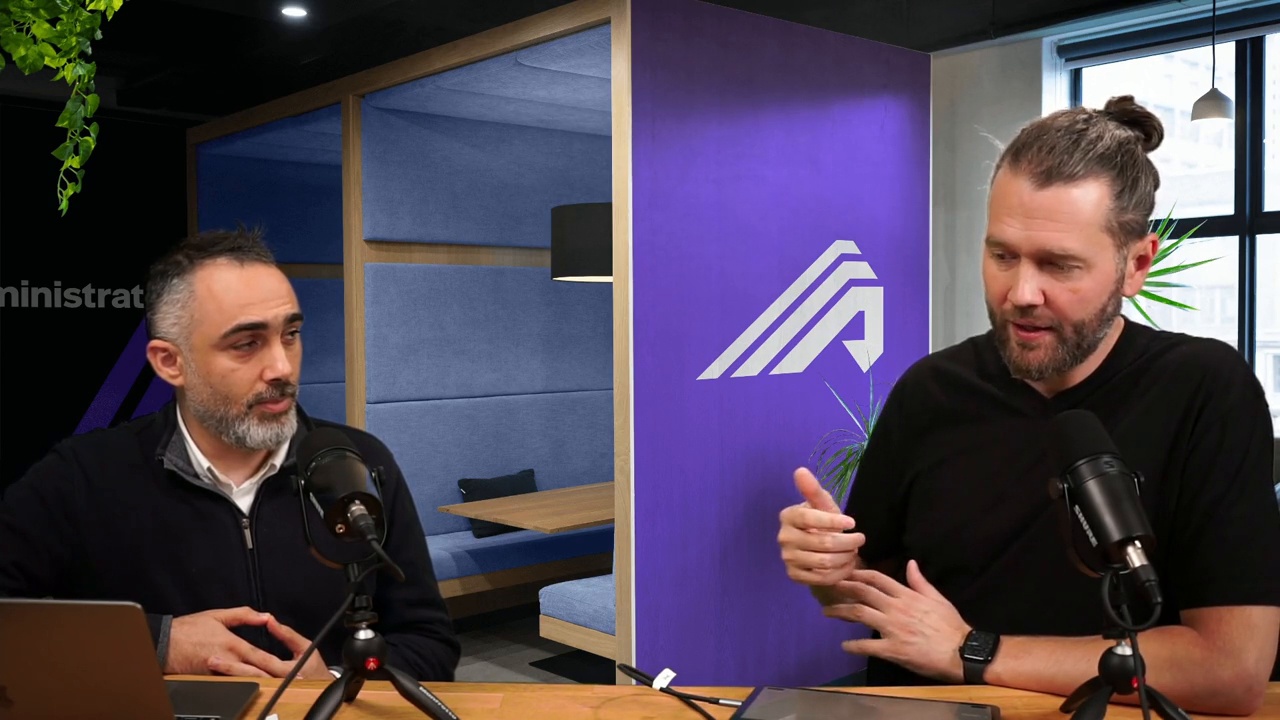
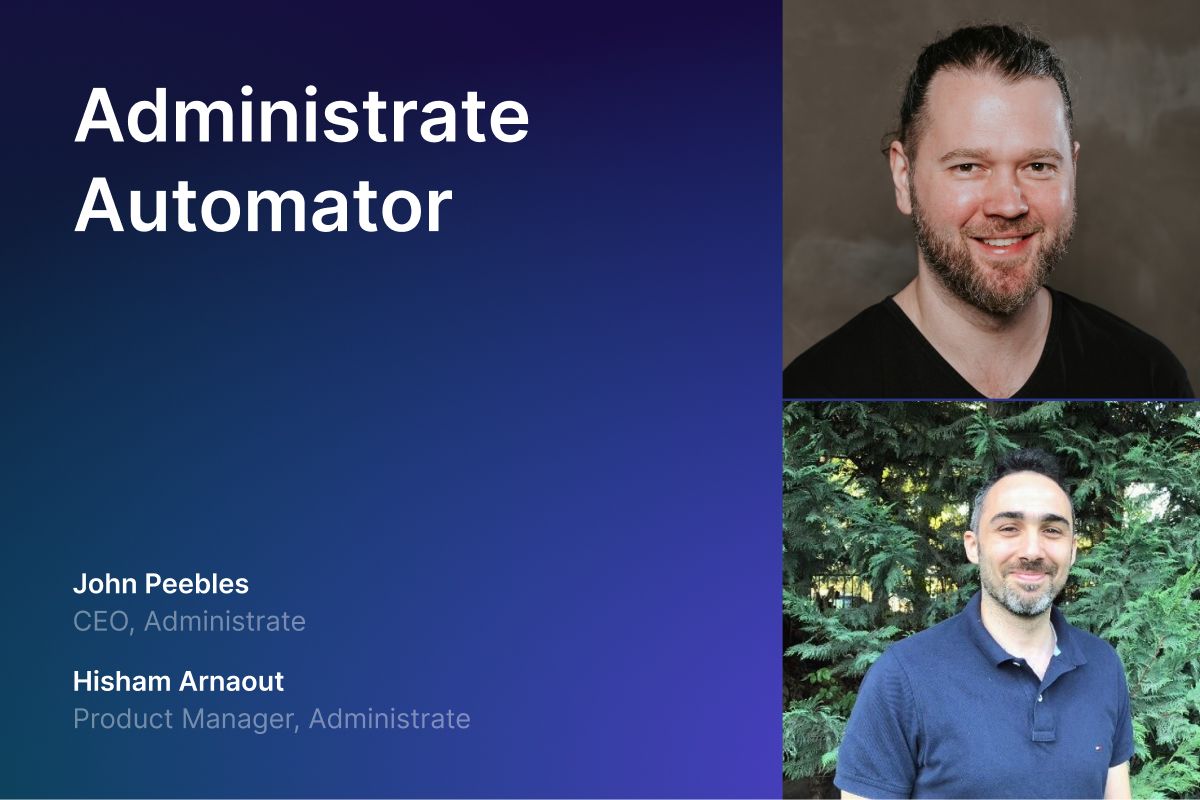
Administrate can help you sell training, no matter what your business model. John Peebles, CEO, and product manager Hisham Arnaout demo training passes and subscriptions. Training subscriptions are a great way to realize recurring revenue.
In this video we explain: how training passes work in Administrate, why you should be generating recurring revenue, and how to package training subscriptions for your sales team.
32:36 watch · 5,497-word transcript
Auto-generated transcript — may contain errors. Tap a timestamp to jump the video.
Another presentation from administrate about how a training management system can supercharge your training operation. My name is John Peebles. I'm here with my colleague, Hisham. And as always, we are broadcasting from our intergalactic headquarters here in Edinburgh, Scotland. And, it's a beautiful day outside, a little bit windy. The festival is in full swing as it is every August, and we are delighted to actually be indoors recording, with you, the audience, about something we're actually very passionate about and has, been a huge force for, driving new business and new revenue to training companies and folks that are selling training, all over the world who are our customers. And that is a concept that we call training passes or also referred to as training subscriptions.
Right? And so we're excited to show you this feature both from a conceptual level, but also to go in-depth and give you a quick live demo. Yeah. So Hisham's gonna do that for us. But before we dive into that, it's probably a good idea to talk about what is a training pass and why is it useful and what are some of the benefits that we can get from it. So, you know, what is a training pass put very simply, Hisham? Training pass simply puts is, training organization can offer its customers a training pass or a subscription where learners can, you know, purchase that training pass, get access to all the content or set limited piece of content depending on how the, you know, training organizations, configure it.
And then they have the freedom to explore and navigate that, you know, training and get access and, consume training, register on to training, without the need to, you know, go back and forth, to the company or to your boss or or anything. Right. So it's access to a specific library of content for a specific amount of time. Exactly. And we'll kinda show you how this this can be everything, kind of like maybe the Netflix model where you get access to everything all at once. Or maybe you you can carve it up and say this amount of content is available on this plan and and so forth and so on. Mhmm. And this is really been driven to some degree by customers of ours who over the last five to ten years have increasingly been SaaS companies, service software as a service companies.
They are selling software or other services as a subscription. And more and more we got the question, which is, well, if we're selling everything else as a subscription, why can't we sell our valuable training content as a subscription? So training as a subscription service is a business model that we have seen become more and more popular over the last five to ten years. And actually, to call back to one of the videos that we've done earlier, we have an entire video out there that is focused on different business models that you can use to sell training to customers. And so we'd highly recommend you check that out. This is one subset of the the various business models that you can use. Many of our customers will use multiple business models at the same time.
You don't have to pick one and so forth. But training passes and subscriptions is definitely one of those business models that deserves a a look, a very good look from any organization out there, because it's so powerful. And the reason that it's powerful is it removes a few barriers that we tend to see crop up when folks are needing to go through and make a decision on every single piece of content or training that they might want to take. And this is true for classroom training. It's also true for elearning content and so forth. And if you think about it, you know, in your own personal life, we probably many of us have an Apple TV. Apple has a store where you can go and you can buy movies, you can rent movies. But I tend to not buy or rent movies very often because I know that every single time I do that, I've got to pay two ninety nine or whatever it is to rent that film.
I only have it for twenty four to forty eight hours. I can't fall asleep and come back to it and so forth. And instead, what tends to happen is I tend to go to Netflix or Disney plus or, you know, what have you. And, it it's much more, it's it's a lot less friction. Yeah. And, And it's also another problem. Right? So training organizations need to be able to have some recurring revenue. Right? Without, you know, training passes or subscriptions, if you wanna call them that, you know, you you need to have you know, to contact the account, you know, manager or salesperson,
you know, buy that training and then register the people onto that training. There's one, there's so many so much friction, and two, you lose that predictability. Right? Because you it's all one offs and you can't anticipate when sales gonna happen, how much learn is you're gonna get, and and when is that money coming in. Right? The other problem is, like, when you purchase training, the revenue is recognized when that training completes. But now with training subscriptions or training passes, that revenue is recognized at every month or right? So you could have that all I mean, you make the lives of your account manager so much simpler because you have that all that automated and streamlined. That's a that's a great point. So, one of the more interesting operations that we have to support public companies usually with is revenue recognition.
Mhmm. And that can be a very hairy problem, depending on, you know, there's a lot of different ways to sell things and account for things and so forth. When you move to a subscription model, you don't have that worry. And what we found having run Administrative University, which is our own training program as a subscription service alongside our software, is people are just willing to experiment more and take a chance on a course that they otherwise wouldn't. Kinda like when I'm arguing with my significant other about what we should be watching on Netflix. I'm willing to watch something that may or may not be great because it's there and I don't have to pay for it every single day. You can access it anytime, any, you know, any place, you log in, have all that training content that you get access to immediately without the hurdle of, like, contacting your boss, get approvals, you know, payments, invoices, and POs, all of that, you get, you know, you could skip.
Okay. So benefits to using subscriptions to sell training are predictability of revenue. We talked about that. Improved engagement. We talked about that just now. It also tends to shorten sales cycles. And this is something that, you know, folks probably don't think about enough. But if again, if you're selling some sort of, all you can eat training program, or at least the, you know, the gold, silver, platinum tier, whatever it is, that decision is a lot less difficult when you know you're getting a ton of value that, you can go after and and use as much as you want than that a la carte Exactly. Decision that that has to be. Imagine anytime, you know, you hire a new employee or you need to upskill your level of your security operations center, that person needs to go in, okay, let's contact, you know, purchasing or sales or whatever.
Get that PO, get that code for that training. And you're talking about an individual training. Right? Yes, sir. What what training organizations want want to have is, okay, one, they wanna be able to easily allocate budgets. They wanna streamline that training. They might have a plan to upscale the level of their security operation center for the next six, twelve months. They wanna have that easy, flexible way of doing it. Whether they're hiring new new people or they wanna just, like, up level the skill of their current employees, they want to be able to do that without that hurdle of, like, for each individual content. And it gets much easier to, you know, sell things in bulk than individual things. Like, okay. Hey. Here's ten training passes or fifty training passes depending on your team size.
You do that one sale, and then the team could level up anytime at their own, you know, plan. Yeah. Another another advantage that we've seen a lot of our customers really enjoy is this idea that when you have a subscription to a big block of training, whatever that is, a big catalog, you become the first port of call for folks that are looking for training and education. And this does a couple of things. One, it improves stickiness. So folks are gonna come back again and again. And if they like the content, they're gonna keep coming back. The second thing that it does is it allows training organizations to upsell things in a much more fluid way.
If I've already taken ten or fifteen courses that are on my subscription, and I'm looking for something else, and you put out a limited edition course or some special extra event or something that's not included in my subscription, I'm probably gonna take a look at it. And I'm probably going to buy that training over some other organization that's out there that has to convince me that they're a good bet. Yep. And think about it. Right? Like, on following up your example right there. Right? You your your company bought this huge, huge medical equipment and and and you just, you know, you trained the the employees who were there. Great. But then the up selling is or the extra incentive that you could provide with that piece of equipment is additional training. Hey. You get this pass for another year.
So if that company hired new people or they, you know, move things around, they have that pass available to train without getting back into the sales and getting that, you know, all this friction. That's right. So you get it right there then there. That's a really important point. What we see is people, organizations buy training passes. They'll buy ten of them or fifty of them or hundred of them. And as folks leave, get hired, and so forth, the past stays the same and they can transfer Exactly. Within the team. And it doesn't mean that all the history gets, you know, mingled together or anything like that. You can have different profiles. Mhmm. But, that idea of the past stays even if team members move around or leave or come Exactly. That's a that's a very powerful thing.
And again, it promotes stickiness and it promotes, this this kind of uptake in content. It's so much easier. And it's like a a new revenue, growth engine for the company. Yeah. So, it's not all roses and rainbows and unicorns though, which fun fact, the unicorn is the patron, animal of Scotland. That's actually true. My niece did not believe me. She had to Google that on her own. I which when I moved here. Yes. Which tells you something about, you know, my credibility in front of five and seven year olds. But, trust me, the the unicorn is the national animal of Scotland. It's not all rainbows and unicorns. There are some challenges that it can occur if you're gonna sell training as a subscription that you may or may not have selling training through kind of conventional methods.
And let's talk through what some of those are. One of the challenges that tends to crop up when you've got a training subscription that, you know, is a challenge normally, but maybe isn't quite as pressing is the idea of you need to have regular new content. Right? So Netflix is always releasing new shows. Mhmm. But this doesn't just apply to e learning. It also applies to the classes that you're running, you need to make sure that you have a well rounded regular catalog of classroom training that is running at consistent intervals that people can book onto and register onto and consume. Right? Yep. And, you know, this may or may not be a kind of a mechanism that has been put in place within your organization, but it's just something to think about.
You cannot have a training subscription and only run the class two or three times a year, for example. You need to make sure that it's available, it's running consistently, and, and so that's one one challenge. Another challenge in offering training as a subscription,
uncommon today to find learning platforms that support training subscriptions. Administrate, obviously, we're gonna show you how we support and think about these subscriptions and these training passes. But many, many products out there do not have a robust concept of selling training subscriptions. And so that can be another big challenge. But the benefits are huge. And one of the benefits that we would encourage you to think about today, if you take away nothing else, is this very key one. And that is that when you have recurring revenue, right, you have revenue that is a subscription, it is recurring, and you've got low churn, for example, that revenue is valued more highly than one off revenue.
And one of the best examples of this was our customer, ForgeRock. ForgeRock is now Ping Identity. They merged together about a year or so ago. They were a software subscription company, a SaaS company. And they had hundreds of millions of dollars of recurring revenue. And they sold software and you'd pay, you know, half a million or a million dollars a year for their identity management platform. But they sold training attached to do software sales. And the training revenue for a long time was not recurring. It was one off. Mhmm. And what that meant was that that revenue, the training revenue got bundled in with other sources of one off revenue like implementation fees and, you know, various little fees here and there. And that revenue, that non recurring revenue was not valued as highly by, their investors, eventually, when when they went public by Wall Street.
And that meant that, you know, this was just kind of one of those things that, was irritating. And so Kevin Streater, who's the VP over there, and we've got a great interview that we did with him, a few weeks ago that's out on our website. You can check it out about how he built this business. One of the things that he did was he sat there and he thought, how can we convert this training revenue, which was in the multimillions of dollars and had grown very, very fast? How can we convert that to something that's more valuable? And so he talked with us. Hisham and the team put together a plan to get training subscriptions and passes built. We built it, and then they began rolling this out to their customer base. And over time, they converted a huge percentage of their existing training customers into recurring revenue training customers.
And that meant that Kevin could walk in to his CFO and say, hey, we have successfully converted this non recurring revenue to recurring revenue. They got a valuation bump, and everybody was ecstatic. And it was a it's a fantastic story. And so I just encourage everybody, that's listening in, don't underestimate the power that recurring revenue will have, particularly when your CFO is looking at it or an investor or somebody else external like TheStreet. Imagine having hundred millions worth of dollars sitting unrecognized because the training maybe didn't happen or not yet happened, and you're unable to report that back. Right? So That's right. Yeah. Okay. So we've talked a lot about subscriptions and training passes.
And one last nuance before we jump into the demo. The difference between a training pass and a training subscription is fairly minor, but some companies, some customers may choose to use one or the other. And why would you why would you care? Well, a training pass is something that is a specific set of content and training for a specific time. Mhmm. It may or may not recur. Some organizations do not care about a recurring revenue model. They just want to sell you this point in time product. You can do that with administrate. Other organizations are like, no, we want to build this evergreen library and service, that is that is all training related, and we want that to recur.
Mhmm. And so it's a small nuance, but you do have that flexibility because we get this conversation sometimes. There's like people are like, well, we don't we don't care. We're not a SaaS business. We're not a recurring revenue business. We we simply don't care. You can still accomplish almost all of these objectives. You just don't need to see that that revenue reoccur. Yeah. And also, when we talked about training business models, one of the things we talked about was making it easy to sell training alongside other major products. Yes. Training subscriptions should be the easiest thing that your sales team has to sell. And the reason is, you don't have to talk about the content specifics.
You don't have to talk about dates and times. You don't talk about who is gonna take this training. All you do is say, how many seats do you want? We'll say you five. We'll say you ten. You tack it onto the sale, hit the button, generate the the the purchase order and the invoice, and away you go. Yep. And and on that as well, like, selling training is one bit, but then on the other hand, you also sell products like medical equipment and whatnot. Right? And at that time, you may not know who's gonna go to train, you know, when, and all of that. You need that flexibility to decide on your own without having phoning the comp company and arranging all of this training plans and when the training is gonna happen and who's gonna be there. So all of that can be solved by a training pass. Right? Hey. If you buy this product, you get a pass for the next year.
Whenever you want, you get to book that training. You you tell us who and where. Sort it out later. Sort it out later. You don't have to go through the loopholes and all all of that stuff happening. Just just tack it on, baby. Just tack it on to the sale. Right? That's what we want. Okay. Exactly. Alright. Demo time. So the first things first, we wanna talk about how you can create and manage these training passes. And then we're gonna go through, alright, how can we assign them to companies or accounts, and then how can learners start using them to register onto content. So first things first, to create and manage training passes, we go to the control panel, and you'll search for training passes. There we go. And, so I have two training passes configured, but we're gonna be configuring one together and then see how we can assign it to content and and go through that.
So create a training pass type. And here's like, I could give it, you know, any label or description on what this pass is. Like, for example, this is an all inclusive, you know, pass. And then we can give it a code, and we could highlight the description on what this pass includes. We could, you know, say includes all course content, something like that. Oops. I made a mistake and then hit okay. Now that we have a pass ready, it's in draft mode. It's not published, so it wouldn't appear anywhere, on on on the other system. Next up is we need to create a pass option, which means, basically, alright.
How do we plan how do we plan to sell this? How do we plan to offer it to to our customers? And pass options could be alright. So let's do, maybe one month plan. And then one month. And it's simple as that. I'm just saying these are the different kind of options that we plan to offer this training pass. Maybe there's a yearly plan. Let me say twelve months. Right? And what that means is, you know, when you offer on when you go to the website, Netflix, for example, you see, like, a pro plan or four screens or five screens. It's literally that. When you go to into another site that you like, you wanna subscribe on a monthly or six month yearly basis, this is exactly what you're building here is how do you plan to offer it.
And then for each plan, what are the various different prices? Right? Because, you know, you could sell, in specific regions. So you could sell North America. We're gonna sell this plan for a hundred dollars per month, for example. In, and in London, it's gonna be some something something pounds. So you could identify various different prices in the various different regions that you plan to sell. And, for this example, we're gonna say, okay, twelve thousand dollars to sell in okay. I only have one region, just the default region. But this is how we can assign the different price. And then once we're happy with oh. So so hang on. So with that region thing, you can kinda do what Netflix does, which is I can have my British price of seven pounds ninety nine or whatever it costs here.
I don't even know. And then you can have your US price of eight dollars Yep. Ninety nine. And those will be shown in the correct region Yes. And you can use that to segment your offerings globally, which many of our customers do. Exactly. It's a super important concept in general, but it also works and filters all the way down to to training pass. That's that's correct. So once we have the prices configured, next up, I'm gonna say, okay. What what training do we wanna include in that pass so that when learners who have this pass active, when they log in, they will have access to this content for free, well, as as per the pass pass allows. And, we could, you know, do a filter based on the categories, search, and and start picking things, and I could just since it's all inclusive, I could pick everything and just add that to the my training pass.
Now once, you know, we were happy with it, we can then publish this pass, and now it becomes available in the system throughout. But I already have done two. So we have basics package. We have the pro package, and really the difference between the two would be pricing and, what kind of content they offer. So there we go. This is an example of, you know, the basic package, or basic pass and what it includes. Now the next step that I wanna show you is, alright, how can we assign them to the customer or to the account that bought them. Right? And you could build integrations to sell it on your website. Like, you could have, I think it had an example made.
But, yeah, you could you could sell this through your website so people could go in, pick a pass, and and and get it, or you could sell it as a lot of our customers do. It just happens in the sale. Right? You you bought an equipment, you get a pass, it's assigned to your account, and then you could go and use it whenever you want. Okay. So let's talk about that for just a second. So not only can I have public training passes that anyone can buy out of my website that anybody can sell, you know, who works for us and so forth? But I can also design a very specific pass for specific customers. That's pretty powerful because, you know, many of us have many training organizations have very large customers that are special in some cases, you know, they could be a huge portion of your business and you want to tailor the offering for them.
Maybe they get special treatment, whatever it is, but you can do that. You've got that flexibility. Exactly. Exactly. Well put, John. Right. So in administrate, the way that we could, you know, assign this to the customer, we could literally just go to, the account. Let's say I'm gonna go to which account do I have? I think this one. So we have an account, Dunder Mifflin. Let's let's assign a training pass for them and then the the okay. There we go. Alright. So when I go when I go to the account in administrate, I'll find a tab, training passes. So clicking on that, I will see, does this account has any training pass assigned? It doesn't.
No records found. So let's go and assign the pro package if they have the all inclusive pass available. And we could set the, pass options so they have this active for twelve months. So and then when does it expire? It's automatically filled based on when I'm assigning it today, but I could, you know, override that and then hit save. And now they have a training pass. And training passes need to be assigned to a contact, and that contact, when they log in, they have this pass active and can access content for free. So even though this pass is assigned to the account, it is not yet activated to the contact. So it act gets activated when I sign it to the contact. And that's when we can, you know, let them use it and and register onto courses.
Okay. In a quick moment of clarification, an account in administrate terminology is a company or a customer. Mhmm. And then a contact is usually, not always, and we don't need to get into that, but that's usually the learner or the person Mhmm. Within the account that it's going to be Take training. Training. Exactly. Exactly. So now that we have the training pass assigned to the account, that account may have bought maybe some equipment or something, and they got this training pass or they have purchased this training pass is now available, for them. The next step is that account can then now assign it to the contacts that wanna use it. And to do that in administrate, you could just click on the pass, click assign contact, and then pick whichever content, contact you wanna assign it to.
So we can assign it to Michael and then save. And then now that you know, Michael now has the training pass active, and they could use it to register onto content and start training. Now I wanna go to, how the learner can use it. So I'm gonna jump into the next screen here. So I'm signed in to the, LMS portal, which is where I could browse the catalog and and find training and then register onto training and consume training. So all of that can happen in the LMS portal. So when I go to the catalog, I'll be able to browse through the content that is made available in my region, and, I could I could just start finding things.
And a couple of things I wanna call out here is browsing the catalog. As you can see, there's an icons that says pass. It means that this content is available through a certain pass, which is the basic. I I guess I can see is the requires the basic pass. So if I have that, I'm able to register on it. If I don't, I'll need to pay for it if it's available in a different kind of payment option. Right? So you could sell content by just, you know, the the currency dollars. You could sell it pass. You could sell it in tokens. So looking at that content, I'm gonna go through a couple of things. So the pass could be, in yellow means, hey. It's, sold through a pass, but I don't have access to that pass.
So if right now, my access as it seems, if you notice the tooltip let me zoom in a bit if it doesn't show well. There we go. So my current pass is basic, but this content requires the pro package. So I can't click and register. I'll have to pay for it because my pass doesn't cover this content. So what I can do is, like, I could filter all the basic all the all the content that's covered by the basic pass, and I could see the green tick means, hey. You could access this today. Oh, okay. Now we can go in and see when all the events are happening and click register, and now I have immediate access to the content without having to go through all these, you know, steps and and and loopholes.
Okay. So a couple of, comments on this. So for folks watching, we have just shown you our kind of booking portal. It's what we call the way that learners can access, administrate Mhmm. And, they can log in and see what options they've had, which Sean was just shown us. But many customers will still have a learning management system as the learner front end Mhmm. And they will not use this functionality. When that is the case, and we've got a whole video about how to integrate your LMS with administrate, the learner would log in to whatever it is to Chivo, thought industries, three sixty learning, skill jar, any of these systems that we partner with. And they would see all of the various options, All they would already be preregistered in in many cases on those.
And, and all of that would be driven from administrate from the back end through an integration. We make available this portal. Customers can use it. They don't have to use it, but we're just kind of showing you the functionality from the learner's perspective. So all this functionality is available through our API. We have customers who integrated under their own learning experience portals, working on the trainings, passes or subscriptions and customers seeing all of that. So everything can be also custom built. And and the challenge the challenge has historically been not showing the learner what's available. It's the back end administration of this that has been difficult Mhmm. Which administrate solves and then how you expose that to your learners, how you sell that to your learners is usually, much, much easier to solve. Yeah. So what does this mean? Right?
So we created a pass, learners were register, all of that feed into the administrative system, and now that you can report. Okay. Training passes. How are they being utilized? How, you know, how are learners engaging with the content? What content works? Recurring revenue, feeding into the financial systems, all of that is running in the background, reporting, feeding in, and and all of that is being fed into external systems if if if if that's what the integrations,
that have been set. But generally, now you could report on all of that when you have that training passes enabled. So hopefully, you've seen just how easy it can be to get training subscriptions up and running for your organization. Administrate takes care of all the back end stuff. You've got a bunch of different options for how you present this to learners. You got a bunch of different options for making it easy to sell, whether that's on your website, via Salesforce, via salesforce dot com. There's there's a whole bunch of options out there. And and hopefully, you've been convinced that the benefits of selling trainees as subscription are pretty substantial. You get that recurring revenue Predictable revenue. Predictable revenue. Enrollments. You stickiness with customers, a whole bunch of whole bunch of, benefits.
Yes. And, yeah. As always, if you've got any questions or comments or wanna get in touch and see a bit more, let us know. My name is John. This is Hisham, and we've, we've enjoyed this time with you. Thanks a lot.